Plan your trip step by step
- Best time to visit Tanzania
- Tanzania weather by month
- Great Migration month by month
- How much does a safari cost?
- Visa and entry requirements
- Safari packing list
- Where to see the Big Five
- Is Tanzania safe?
- Tipping guide
Quick facts about Tanzania
| Fact | Detail |
|---|---|
| Capital | Dodoma (Dar es Salaam is the largest city) |
| Languages | Swahili and English |
| Currency | Tanzanian shilling (TZS); US dollars widely used for tourism |
| Time zone | East Africa Time (UTC+3) |
| Main airports | Kilimanjaro (JRO), Dar es Salaam (DAR), Zanzibar (ZNZ) |
| Electricity | 230 V, mostly UK-style three-pin sockets |
Useful Swahili phrases
| English | Swahili |
|---|---|
| Hello | Jambo / Habari |
| Thank you (very much) | Asante (sana) |
| Slowly | Pole pole |
| No problem | Hakuna matata |
| Lion | Simba |
| Elephant | Tembo |
Tanzania’s main travel regions
| Region | Highlights | Best for |
|---|---|---|
| Northern circuit | Serengeti, Ngorongoro Crater, Tarangire, Lake Manyara | First safaris, the Great Migration, easy road access from Arusha |
| Southern circuit | Nyerere, Ruaha, Mikumi | Quieter parks, boat safaris and walking |
| Western parks | Katavi, Gombe Stream, Mahale Mountains | Remote wilderness and chimpanzee trekking |
| Mountains | Kilimanjaro and Mount Meru | Trekking and climbing |
| Coast and islands | Zanzibar, Mafia Island | Beaches, diving and Swahili culture |
For a park-by-park overview, see our Tanzania safari destinations page.
Getting around
- By road: most northern safaris travel in 4×4 vehicles with pop-up roofs. Roads to the parks are a mix of tarmac and gravel, and traffic drives on the left.
- By air: light aircraft link Arusha, Dar es Salaam and Zanzibar with airstrips in the parks, saving long drives. Luggage limits are often around 15 kg in soft bags.
- By train: the electric SGR line links Dar es Salaam with Morogoro and Dodoma and is a comfortable option for some southern trips. Read our guide to the SGR electric train.
- By ferry: fast ferries run between Dar es Salaam and Stone Town.
Health and safety basics
Talk to a travel clinic before you go about malaria prevention and vaccinations. A yellow fever certificate is required if you arrive from, or transit through, a country with yellow fever risk. Drink bottled or treated water, use sunscreen at altitude, and keep valuables discreet in towns. Most visits are trouble-free; our safety guide covers common-sense precautions.
Money and connectivity
US dollars are widely used for safaris and park-related payments, and many places prefer newer, undamaged notes. Tanzanian shillings are handy for markets, taxis and small purchases. ATMs are found in towns such as Arusha, Moshi, Dar es Salaam and Stone Town, but not in the parks. Local SIM cards are easy to buy with your passport. See money in Tanzania for details.
Culture and etiquette
- Greet people before asking a question; a simple “Habari” goes a long way.
- Ask before photographing people, especially in Maasai villages and markets.
- Dress modestly in towns and on Zanzibar, covering shoulders and knees.
- Use your right hand to give and receive items.
Seasons in one minute
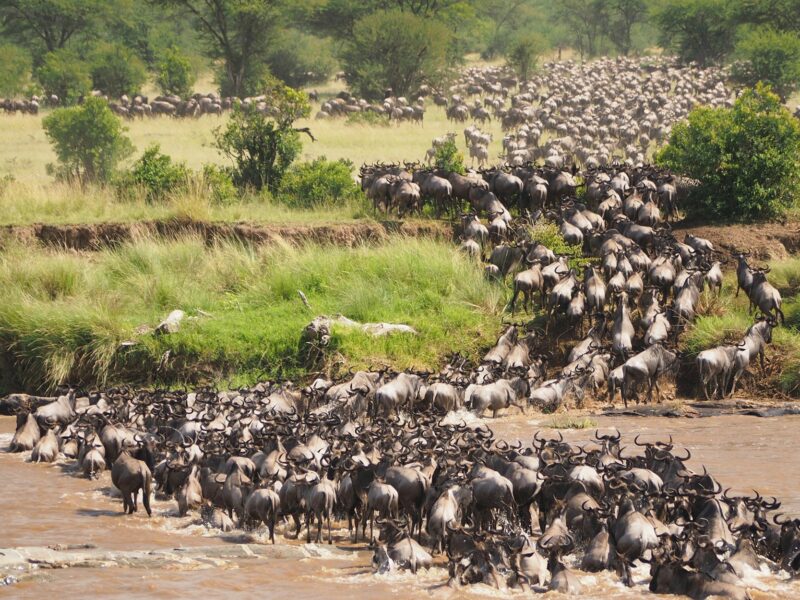
The long dry season, roughly June to October, is the classic safari time. The short rains usually fall around November and December, and the long rains around March to May. January and February are warm and often good for calving in the southern Serengeti.
Related reading from our Safari Journal
- Zanzibar on a Budget: How to Save Money
- 15 Things to Do in Stone Town, Zanzibar
- The Complete Kilimanjaro Packing List
Further reading
Learn more from independent, authoritative sources: